

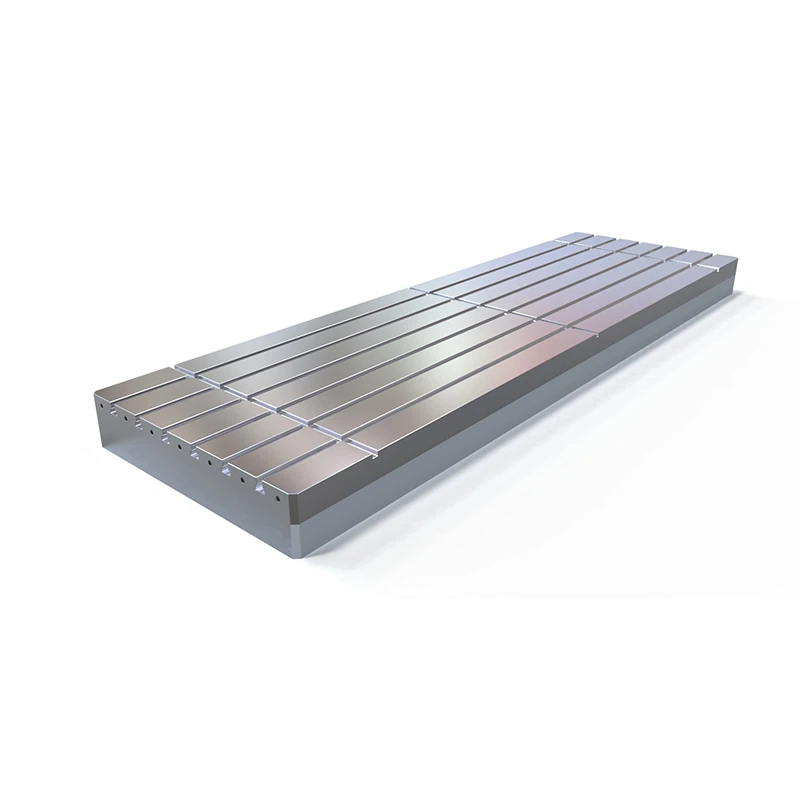
As a supplier of Machine Table Support Plates, I often encounter questions from customers about the proper storage of these essential components. The storage of a Machine Table Support Plate is not a simple matter; it involves several special requirements to ensure the plate's quality and performance over time. In this blog, I will delve into the key factors and special requirements for storing a Machine Table Support Plate.
Environmental Conditions
One of the most critical aspects of storing a Machine Table Support Plate is the environmental conditions. The plate is typically made of metal, which is susceptible to corrosion and rust. Therefore, the storage area should be dry and well - ventilated. High humidity can cause moisture to accumulate on the surface of the plate, leading to oxidation and pitting. A relative humidity level of less than 60% is generally recommended.
Temperature also plays a significant role. Extreme temperatures can cause the metal to expand or contract, which may affect the plate's flatness and dimensional accuracy. The ideal storage temperature range is between 10°C and 30°C. Avoid storing the plate in areas where there are significant temperature fluctuations, such as near heating or cooling vents.
Protection from Physical Damage
The Machine Table Support Plate is a precision component, and any physical damage can compromise its functionality. When storing the plate, it should be placed on a flat and stable surface. Avoid placing heavy objects on top of the plate, as this can cause dents or warping. If multiple plates are stored together, they should be separated by soft padding, such as rubber or foam, to prevent scratching and abrasion.
It is also important to protect the plate from impacts. The storage area should be free from any potential sources of impact, such as moving machinery or heavy equipment. If the plate needs to be moved, proper handling equipment, such as forklifts or hoists, should be used, and the plate should be secured to prevent it from shifting or falling.
Cleanliness
Before storing the Machine Table Support Plate, it should be thoroughly cleaned. Any dirt, debris, or oil on the surface can attract moisture and accelerate corrosion. Use a mild detergent and a soft cloth to clean the plate, and then dry it completely. After cleaning, a thin layer of anti - rust oil can be applied to the surface to provide additional protection.
During storage, the plate should be kept clean. Regularly inspect the storage area for dust and debris, and remove any that may have accumulated on the plate. If the plate is stored in a sealed container, make sure the container is clean and free from contaminants.
Storage Orientation
The orientation of the Machine Table Support Plate during storage can also affect its performance. The plate should be stored in a horizontal position to maintain its flatness. Storing the plate vertically can cause it to bend or warp over time, especially if it is a large or heavy plate.
If the plate has a specific surface finish or precision markings, it should be protected from contact with other surfaces. For example, if the plate has a machined surface, it should be covered with a protective film to prevent scratching.
Documentation and Inventory Management
Proper documentation and inventory management are essential for storing Machine Table Support Plates. Each plate should be labeled with its specifications, including size, material, and serial number. This information can help in quickly identifying the plate and ensuring that it is used in the correct application.
An inventory system should be established to track the storage location and quantity of the plates. This can help in preventing loss or misplacement of the plates and ensure that there is an adequate supply for customer orders. Regular inventory checks should be conducted to verify the condition and quantity of the stored plates.
Compatibility with Other Components
If the Machine Table Support Plate is to be stored with other components, it is important to ensure compatibility. Some materials may react with each other, causing corrosion or other damage. For example, if the plate is made of steel and is stored with copper components, galvanic corrosion may occur. Therefore, it is advisable to store different materials separately.
Long - Term Storage
For long - term storage, additional precautions may be required. The plate can be wrapped in a moisture - resistant material, such as plastic or wax paper, to provide extra protection against humidity. It can also be stored in a sealed container with a desiccant to absorb any moisture that may enter the container.
Regular inspections should be carried out during long - term storage to check for any signs of damage or deterioration. If any issues are detected, appropriate measures should be taken immediately to prevent further damage.
Conclusion
In conclusion, there are several special requirements for storing a Machine Table Support Plate. By paying attention to environmental conditions, protecting the plate from physical damage, maintaining cleanliness, storing it in the correct orientation, and implementing proper documentation and inventory management, the quality and performance of the plate can be ensured over time.
As a supplier of Machine Table Support Plate, we understand the importance of proper storage. Our products are designed to meet the highest quality standards, and we are committed to providing our customers with the best possible support. If you have any questions about the storage of our Machine Table Support Plates or are interested in purchasing our products, please feel free to contact us for a procurement discussion. We also offer a wide range of Special Purpose Machine Parts and Core Assemblies for Specialized Instruments to meet your specific needs.
References
- ASM Handbook Volume 11: Failure Analysis and Prevention. ASM International.
- Machinery's Handbook, 31st Edition. Industrial Press.


