

Hey there! As a supplier of special parts for microscopes, I'm super excited to share with you all the cool and crucial components that make these amazing instruments tick. Microscopes have been around for ages, and they've come a long way in terms of technology and functionality. But what really sets them apart are the special parts that work together to provide clear and detailed images.
Let's start with the lenses. The objective lens is probably the most important part of a microscope. It's the one that's closest to the specimen and does the heavy lifting when it comes to magnifying the image. Different objective lenses have different magnifications, usually ranging from 4x to 100x. The higher the magnification, the more detailed the image, but also the smaller the field of view. Some microscopes even have multiple objective lenses that can be switched easily, allowing you to get a variety of magnifications without having to change the entire microscope.
Another key part is the eyepiece lens. This is the lens that you look through, and it further magnifies the image that's been magnified by the objective lens. Most eyepiece lenses have a magnification of 10x, but there are also ones with higher or lower magnifications available. The combination of the objective lens and the eyepiece lens determines the total magnification of the microscope. For example, if you're using a 40x objective lens and a 10x eyepiece lens, the total magnification would be 400x.
Now, let's talk about the stage. The stage is where you place the specimen that you want to observe. It's usually a flat surface with clips or other mechanisms to hold the specimen in place. Some stages are fixed, while others can be moved up and down, left and right, or even rotated. This allows you to position the specimen exactly where you want it in the field of view. There are also stages that are designed for specific types of specimens, such as slides or Petri dishes.
The illumination system is also very important. Without proper lighting, it would be impossible to see the specimen clearly. Most microscopes have a built-in light source, such as an LED or a halogen lamp. The light is directed through the specimen and then through the lenses to your eye. Some microscopes also have adjustable light intensity and color temperature, which can be useful for different types of specimens and observations.
In addition to these basic parts, there are also a lot of special parts that can enhance the performance of a microscope. For example, Tee Slot Clamps are great for holding accessories or additional equipment in place. They're easy to install and can be adjusted to fit different sizes and shapes. These clamps are really handy if you want to add things like a camera or a filter to your microscope.
Another special part is the Precision Mounting Base for Medical Equipment. This base provides a stable and accurate platform for the microscope, which is especially important in medical and scientific applications. It helps to reduce vibrations and ensure that the microscope stays in place, even when you're making fine adjustments.
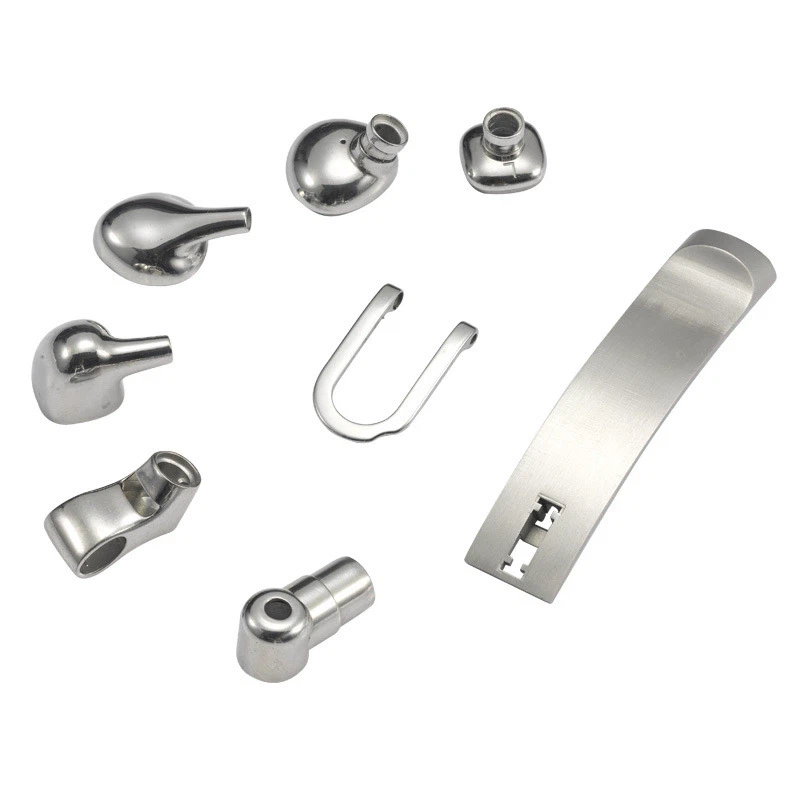
And then there's the Special-shaped Connector. This connector is designed to fit specific types of microscopes or accessories, and it can be used to connect different parts together. It's a great way to customize your microscope and make it more versatile.
So, as you can see, there are a lot of special parts that make a microscope unique and useful. Whether you're a student, a researcher, or a professional in the medical field, having the right parts can make a big difference in your observations and experiments.

If you're interested in purchasing any of these special parts for your microscope, or if you have any questions about them, don't hesitate to reach out. We're here to help you find the perfect parts for your needs and ensure that your microscope is working at its best. Let's start a conversation and see how we can make your microscopy experience even better!
References
- "Microscopy: A Laboratory Manual" by David B. Fowle
- "The Microscope: A User's Guide" by Richard J. D'Amico
- Various scientific articles on microscope technology and components.


